Posts

Showing posts with the label History

World War 3: The Risks and Realities

World War 3, also known as WWIII, is a hypothetical global military conflict that many experts fear could result in catastrophic consequences for humanity. The term is often used to describe a hypothetical third world war that could potentially escalate into a full-scale global conflict. The possibility of such a conflict has increased in recent years due to the growing tensions between major world powers, the proliferation of nuclear weapons, and the rise of cyber warfare. In this article, we will explore the risks and realities of World War 3 and the factors that could potentially lead to it. The Political and Economic Climate Leading to World War 3 The political and economic climate around the world is becoming increasingly tense, with many countries competing for power and resources. Superpowers such as the United States, Russia, and China are flexing their muscles and attempting to assert dominance over one another. These power struggles have led to a rise in nationalism, popul...

The World Wonders: A Journey Through Time and Space

Image
Have you ever wondered what are the most amazing structures ever built by human beings? How did they manage to create such feats of engineering and artistry? And what can we learn from them today? In this article, we will explore the world wonders, a collection of remarkable monuments that span across different eras and cultures . The world wonders are not a fixed list, but rather a concept that has evolved over time. The first known list of seven wonders dates back to the 2nd–1st century BC, and it included the Great Pyramid of Giza, the Colossus of Rhodes, the Lighthouse of Alexandria, the Mausoleum at Halicarnassus, the Temple of Artemis, the Statue of Zeus at Olympia, and the Hanging Gardens of Babylon². These were all structures present during classical antiquity , and they represented the achievements and aspirations of ancient civilizations. However, only one of these wonders still exists today: the Great Pyramid of Giza. The rest have been destroyed by natural disasters , wars...

Why Did the French Hate the Eiffel Tower When It Was Built?

Image
The Eiffel Tower is one of the most iconic landmarks in the world, attracting millions of visitors every year. It is a symbol of France, its culture, and its history. But did you know that when it was first built, many French people hated it and wanted it to be torn down? The Origin of the Eiffel Tower The Eiffel Tower was designed by Gustave Eiffel, a famous engineer who specialized in building bridges and metal structures. He submitted his proposal for a 300-meter (984-foot) tower made of iron to a competition organized by the French government for the International Exposition of 1889. The exposition was meant to celebrate the 100th anniversary of the French Revolution and showcase the achievements of France and other nations. Eiffel's design was chosen among more than 100 entries, and he was given permission to build his tower on the Champ de Mars, a large public park near the Seine River. He hired about 250 workers and spent two years constructing the tower, using more than 18...

How did ancient civilizations use astronomy to measure time and seasons?

Image
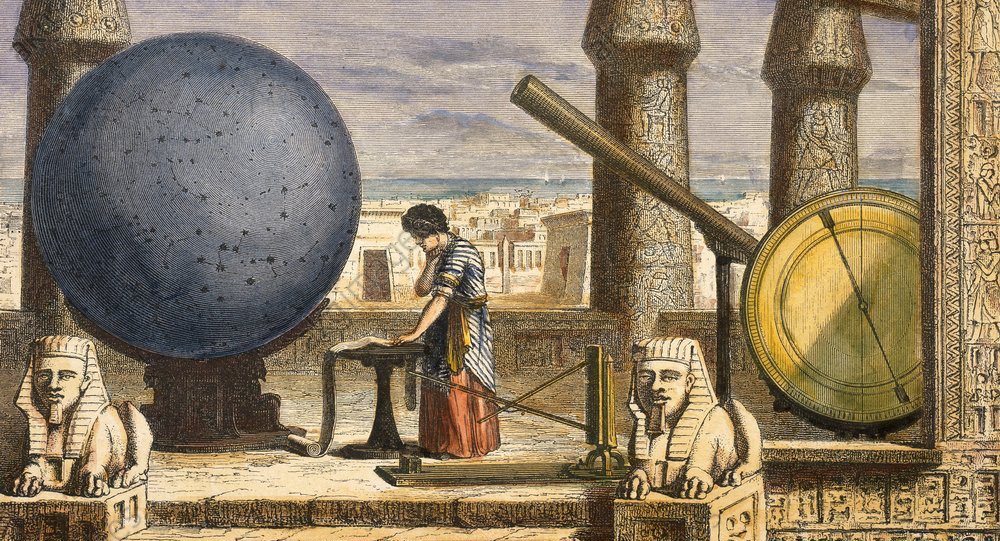
Astronomy is the study of the stars, planets, and other celestial bodies that fill the sky. It is one of the oldest sciences , dating back to ancient times when people observed the heavens for practical purposes such as navigation and agriculture. Ancient civilizations relied upon the apparent motion of these bodies through the sky to determine seasons, months , and years[^1^][1]. One of the most basic ways that ancient people used astronomy to measure time was by observing the cycle of day and night. The sun rises in the east and sets in the west every day, but its position at sunrise and sunset changes throughout the year. By tracking the sun's position along the horizon, people could mark the solstices (the longest and shortest days of the year) and the equinoxes (the days when day and night are equal). These events marked the change of seasons and were important for planning agricultural activities . Another way that ancient people used astronomy to measure time was by observin...

The history of social movements and human rights

Image
Human rights are often seen as universal and timeless principles that protect the dignity and freedom of all human beings. However, human rights are not natural or given; they are the result of historical struggles and collective actions by various social movements. In this blog post, I will explore some of the theoretical perspectives and historical examples of how social movements have shaped and challenged human rights. One of the main arguments in the literature on human rights and social movements is that human rights are not fixed or static; they are dynamic and contested. Human rights are constantly redefined and renegotiated by different actors and groups in different contexts and times. As Neil Stammers argues in his book Human Rights and Social Movements, human rights are "socially constructed through struggle" [^1^][1]. This means that human rights are not simply given by law or authority; they are claimed and defended by people who mobilize and organize for the...

Technical History: How Humans Have Shaped Their World with Technology

Image
T echnology is the application of knowledge, skills and tools to solve problems and achieve goals. Technology has been a key factor in the development of human civilization, culture and society. Technology has also influenced and been influenced by the natural environment, politics, economics, religion, art and science. In this article, we will explore some of the major stages and achievements of technical history, from prehistoric times to the present day. Prehistoric Technology Prehistoric technology refers to the technology used by humans before the invention of writing, around 5,000 years ago. Prehistoric technology includes the use of fire, stone tools, clothing, shelter, hunting and gathering, agriculture and animal domestication. Prehistoric technology was mainly based on trial and error, observation and imitation of nature, and cultural transmission . Some of the notable examples of prehistoric technology are: - The control of fire , which enabled humans to cook food, keep w...

Uncovering the Mysteries of Ancient Civilizations: A Journey Through Time

Human civilization has existed for thousands of years, and throughout this time, many ancient civilizations have risen and fallen. These civilizations have left behind a rich legacy of art, literature, architecture, and other cultural artifacts that provide us with a window into their societies and way of life. Uncovering the mysteries of these ancient civilizations is a fascinating journey through time that allows us to gain a deeper understanding of our shared human history. One of the most intriguing aspects of ancient civilizations is the sheer scale of their achievements. From the monumental structures of the ancient Egyptians to the advanced mathematical and astronomical knowledge of the Mayans, these civilizations were capable of incredible feats of engineering, science, and art that still leave us in awe today. However, much of the knowledge about these civilizations has been lost over time. Many ancient texts and artifacts have been destroyed by war, natural disasters, or sim...

The Quest for the Lost City of Atlantis: National Treasure Edge of History

Image
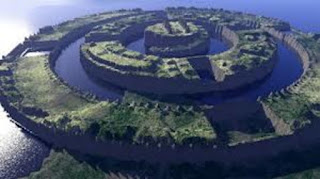
The legend of Atlantis has captivated the imaginations of people for centuries, with many searching for evidence of its existence. Theories abound about where the lost city could be, and what caused its ultimate demise. Now, the new National Treasure film, "Edge of History," takes on this legendary quest, following a team of explorers as they delve into the mysteries of the past. The film's protagonist, treasure hunter Ben Gates (played by Nicolas Cage), has spent years searching for clues to the location of Atlantis. With the help of his team, he uncovers evidence that suggests the lost city might be located somewhere in the Mediterranean. But as they race against time to discover the truth, they encounter obstacles and adversaries that threaten to derail their mission. The search for Atlantis has been the subject of numerous theories over the years. Some suggest that the city was located on the island of Santorini in Greece, which was destroyed by a massive volcanic er...